The best time to visit Vietnam from India is November to April, when the country’s central and southern regions enjoy dry, sunny weather and cooler temperatures. For North Vietnam (Hanoi, Halong Bay), October to December is ideal. If you’re hunting for cheaper flights and fewer tourists, the shoulder months of September–October and May are worth serious consideration.
Why Do Indian Travellers Love Vietnam So Much?
Vietnam keeps showing up on Indian travel wishlists — and it’s not just hype. The country offers genuinely good value compared to Europe or even Bali. A week-long trip for two can come in under ₹1.2 lakh if you plan smart, and the food, landscapes, and culture punch well above that budget.
The direct flight options have improved significantly. You can fly from Delhi or Mumbai to Hanoi or Ho Chi Minh City on IndiGo, Air India, or Vietnam Airlines, with connecting routes via Bangkok, Kuala Lumpur, or Singapore. Fares start around ₹18,000–₹28,000 return from Delhi and ₹20,000–₹30,000 from Mumbai, depending on season and how early you book.
Indians also find Vietnam surprisingly comfortable to navigate. English is widely spoken in tourist areas, the food has plenty of vegetarian workarounds (more on that below), and the people are warm and genuinely welcoming.
What Is the Best Time to Visit Vietnam from India? (Month-by-Month Breakdown)
Vietnam is a long, narrow country — what’s sunny in the south can be rainy in the centre. That’s why the “best time” question needs a more honest answer than most travel blogs give you.
November to April — Prime Season (Dry & Sunny)
This is when Vietnam is at its most comfortable. Ho Chi Minh City, the Mekong Delta, Hoi An, Da Nang, and Phu Quoc island all see clear skies and low humidity. Halong Bay and Hanoi are cooler (sometimes sweaty-jacket cold in December–January), but still very manageable.
This is peak season for Indian travellers, especially December–January, when schools are on holiday. Expect higher hotel rates and some crowding at popular spots like Hoi An’s Ancient Town or Halong Bay. Book accommodation at least 6–8 weeks in advance.
May to August — Vietnam’s Summer, South and Centre Are Fine
The south stays relatively dry. Ho Chi Minh City and Phu Quoc see some afternoon showers but nothing trip-ruining. Central Vietnam (Hoi An, Da Nang) starts getting humid and occasionally rainy. North Vietnam (Hanoi, Sapa, Halong Bay) is lush, green, and genuinely beautiful — if you don’t mind the odd downpour.
Flights in this period drop noticeably in price. This is a great time for budget travellers who can work around some rain.
September to October — Vietnam Monsoon Season at Its Peak (Use Caution)
This is the tricky window. Central Vietnam — especially Hoi An and Da Nang — gets hit hard by the Vietnam monsoon season, with typhoon risk in October. Avoid the central coast in October unless you’re flexible with dates.
However, the south (Ho Chi Minh City, Mekong, Phu Quoc) and north (Hanoi, Ninh Binh) are manageable and significantly cheaper. If your itinerary skips the centre, September–October can actually be a solid budget window.
Quick Month-by-Month Snapshot
| Month | Weather | Crowd Level | Budget Score |
|---|---|---|---|
| Jan | Dry & cool ✅ | High | ₹₹₹ |
| Feb | Dry & warm ✅ | Medium-High | ₹₹₹ |
| Mar | Warm, dry ✅ | Medium | ₹₹ |
| Apr | Hot, dry ✅ | Low-Medium | ₹₹ |
| May | Some rain 🌦 | Low | ₹ |
| Jun–Aug | Summer rain 🌧 | Low | ₹ |
| Sep–Oct | Monsoon ⚠️ | Very Low | ₹ |
| Nov | Dry returns ✅ | Growing | ₹₹ |
| Dec | Peak season ✅ | Very High | ₹₹₹₹ |
How Much Does a Vietnam Trip Cost from India?
Vietnam is genuinely affordable, but costs vary wildly based on how you travel. Here’s an honest breakdown in rupees:
| Category | Daily Cost (Per Person) | What’s Included |
|---|---|---|
| Budget | ₹2,500–₹4,000/day | Hostel dorm or basic guesthouse, local pho/banh mi meals, local buses, free/low-cost sights |
| Mid-Range | ₹5,000–₹9,000/day | 3-star hotel, sit-down restaurants, occasional Grab rides, day tours |
| Luxury | ₹15,000–₹30,000+/day | 4–5-star hotels, cruises on Halong Bay, private transfers, fine dining |
Total 7-night trip cost from India (including flights):
- Budget: ₹55,000–₹75,000 per person
- Mid-Range: ₹90,000–₹1,30,000 per person
- Luxury: ₹2,00,000–₹3,50,000 per person
The Vietnam dry season (November–April) pushes hotel rates up by 20–40% compared to off-peak. If you want value, March–April or late October are the sweet spots — dry enough to enjoy, quiet enough to save.
Check out our Vietnam tour packages from India for curated options across all three budgets.
Do Indians Need a Visa for Vietnam in 2026?
Yes, Indian passport holders need a visa for Vietnam. The good news: it’s easy, cheap, and can be done entirely online.
E-Visa (Recommended Route)
Vietnam offers a single-entry or multiple-entry e-visa valid for up to 90 days. This is the simplest option for Indian travellers.
Step-by-step process:
- Go to the official Vietnam e-visa portal: evisa.xuatnhapcanh.gov.vn
- Fill in personal and passport details
- Upload your photo and passport scan
- Pay the fee: ₹1,800–₹2,000 approx (USD 25 for single entry)
- Processing time: 3–5 working days
- Receive e-visa by email; print it out before travel
Documents needed:
- Valid Indian passport (minimum 6 months validity)
- Passport-size photo (white background)
- Scanned passport bio page
- Debit/credit card for payment
Pro tip: Apply at least 2 weeks before travel. The portal occasionally has processing delays and you don’t want a last-minute panic.
Top Places to Visit in Vietnam: A Practical 10-Day Itinerary
This route works best November–April (Vietnam peak season for Indian tourists) but is doable year-round if you swap out the central coast during monsoon months.
Day 1–3: Ho Chi Minh City (HCMC)
- War Remnants Museum — emotionally intense, historically important
- Ben Thanh Market — shopping and street food, go in the evening
- Cu Chi Tunnels day trip — genuinely fascinating underground tunnel network
Day 4–5: Mekong Delta or Phu Quoc
- Mekong boat tour from HCMC — floating markets, coconut farms, local villages
- Or fly to Phu Quoc for beaches and fresh seafood (great for families)
Day 6–7: Hoi An
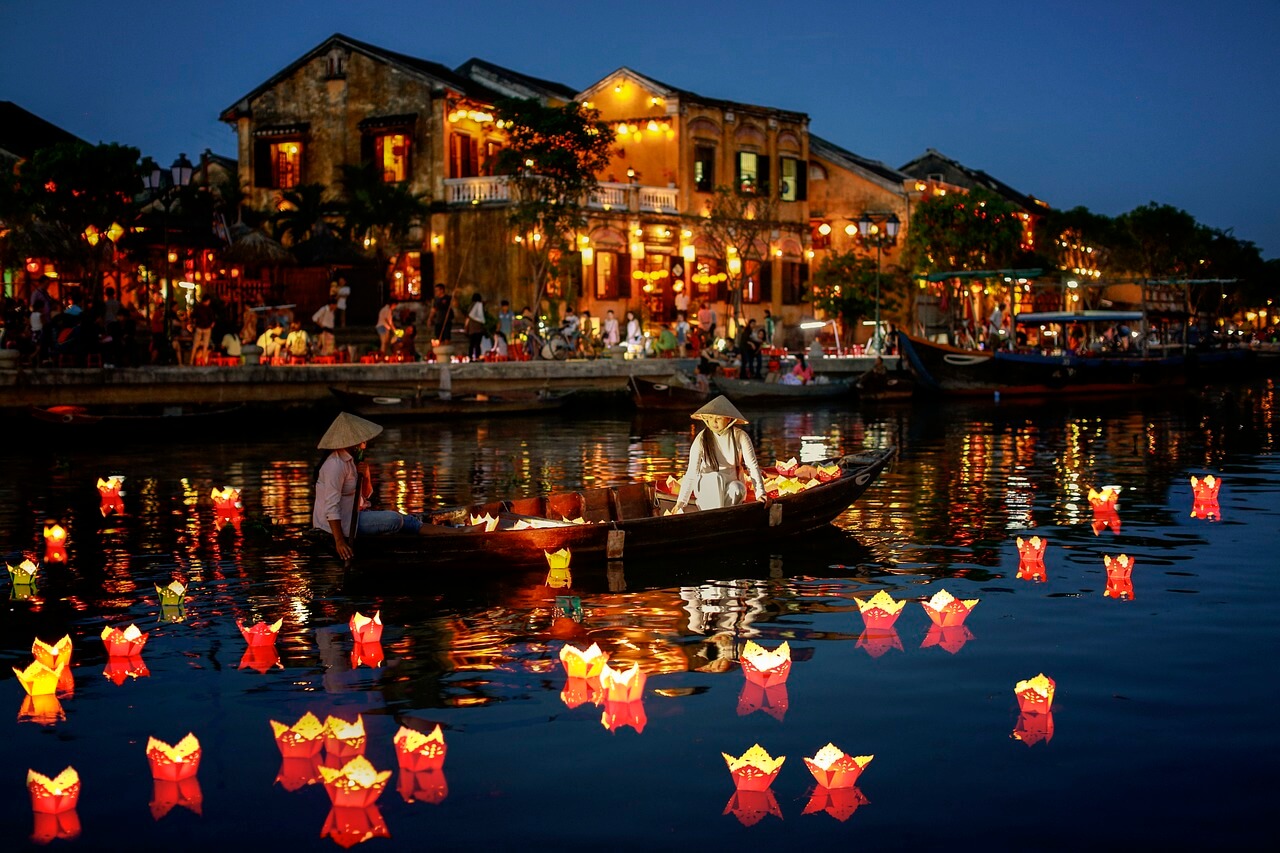
- Ancient Town — lantern-lit lanes, tailors, and the best banh mi in the country
- My Son Sanctuary day trip — ancient Cham ruins, less crowded than Angkor
Day 8–9: Hanoi
- Hoan Kiem Lake and Ngoc Son Temple — peaceful morning walk
- Old Quarter street food tour — bun cha, egg coffee, pho
- Hanoi Train Street — smaller than Instagram suggests, but fun
Day 10: Halong Bay (overnight cruise)
- Book a minimum 2-night cruise — one night is too rushed
- Kayaking through limestone karsts is an experience unlike anywhere else in Asia
Tips Specifically for Indian Travellers Going to Vietnam
Vegetarian Food
Vietnam is not the easiest country for vegetarians. Most dishes contain fish sauce or shrimp paste. Your go-to phrase: “Không có thịt, không có cá” (No meat, no fish). Buddhist restaurants (com chay) in bigger cities like Hanoi and HCMC are your best friend — full vegetarian menus, cheap prices.
SIM Card
Buy a local Vietnamese SIM at the airport on arrival. Viettel and Vinaphone both offer tourist SIMs with 4G data for about ₹400–₹600 for 30 days. Much better than roaming.
Currency Exchange
Vietnam uses the Vietnamese Dong (VND). 1 Indian Rupee ≈ 290–300 VND. Exchange at gold shops (tiệm vàng) in local markets rather than airports — you’ll get a noticeably better rate. Carry some USD as a backup; it’s accepted at many tourist spots.
Getting Around
Use Grab (Southeast Asia’s Uber) for taxis — safe, metered, and you see the price before booking. Avoid unmarked taxis in tourist areas; overcharging is common.
Safety
Vietnam is one of Southeast Asia’s safer destinations for Indian tourists. The main risk is petty theft in crowded Old Quarter areas. Keep your phone in your front pocket and don’t flash expensive cameras unnecessarily.
Cultural Tips
- Remove shoes before entering temples
- Dress conservatively at religious sites (shoulders and knees covered)
- Bargaining is normal at markets — start at 50% of the asking price and meet in the middle
For a fully planned experience, browse our customised Vietnam tours from Delhi — we handle everything from visa assistance to accommodation.
What Should You Book in Advance for Vietnam?
- Halong Bay cruise — 6–8 weeks ahead in peak season; good boats sell out
- Flights from India — 8–12 weeks ahead for the best fares, especially December–January
- Hoi An accommodation — 4–6 weeks ahead; the town has limited quality mid-range hotels
- Train tickets (Hanoi to Hoi An / HCMC) — book on 12go.asia, at least 3–4 weeks ahead
- Cooking classes in Hoi An — popular slots fill quickly, book 2 weeks out
- My Son Sanctuary tickets — can book on arrival, but early morning entry is worth pre-booking
FAQ: Best Time to Visit Vietnam from India
When is the best time to visit Vietnam from India to avoid crowds?
March and April are arguably the best months — the Vietnam dry season is still going strong, the Christmas–New Year rush has passed, and prices at hotels and flights are noticeably lower. You get good weather without the December chaos.
Is Vietnam safe for Indian solo female travellers?
Yes, Vietnam is generally considered safe for solo female travellers. Stick to well-lit areas at night, use Grab instead of unmarked taxis, and trust your gut. Cities like Hoi An and Hanoi have active tourist areas where solo travel feels comfortable and easy.
What is the Vietnam monsoon season and should Indians avoid it?
Vietnam monsoon season peaks from September to November in central Vietnam (Hoi An, Da Nang). The south sees rain from May to October, but it’s usually manageable. If your trip focuses on HCMC and Phu Quoc, the monsoon impact is minimal and you’ll save significantly on travel costs.
How many days is enough for a Vietnam trip from India?
10–12 days is the ideal length for a first Vietnam trip covering HCMC, Hoi An, and Hanoi. A week is doable if you focus on one or two regions. Anything under 5 days will feel rushed and you’ll miss what makes Vietnam worth the trip.
Which is cheaper — Vietnam or Thailand for Indian travellers?
Both are similarly priced, but Vietnam tends to be slightly more affordable on food and local transport. Flights from India to Bangkok are often cheaper, but Vietnam’s domestic flights and street food costs are lower. For overall value, Vietnam edges ahead slightly on a like-for-like comparison.
Can Indians get a visa on arrival for Vietnam in 2026?
Visa on Arrival (VOA) is technically available but requires a pre-approved letter arranged through a visa agency, which adds cost and complexity. The e-visa is simpler, cheaper, and fully official. Apply online at the government e-visa portal at least 2 weeks before your travel date.
Ready to Plan Your Vietnam Trip?
The best time to visit Vietnam from India really does depend on where you’re going and what you’re after — dry-season beaches, misty northern mountains, or off-season savings. There’s no universally wrong time to go; there’s just the right trip for the right season.
At Chalo Travellers, we’ve been planning Vietnam trips for Indian travellers for years and know exactly which hotels are worth the price, which Halong Bay cruise operators are legitimate, and how to build an itinerary that doesn’t exhaust you. We’re based in New Delhi and understand what Indian travellers actually need — including vegetarian meals, visa support, and flexible payment options.
WhatsApp us directly at [your number] to get a personalised Vietnam quote, or explore our ready-made packages at chalotravellers.com. No pushy sales calls — just real advice from people who’ve been there.