India is a country rich in history, where every corner tells a tale of ancient civilizations, majestic empires, and cultural evolution. For travelers passionate about history, India offers a plethora of destinations that unveil its storied past. At Chalo Travellers, we believe exploring historic places in India is not just about sightseeing but a journey into the heart of its heritage. In this guide, discover the most enchanting historic places in India that promise to transport you to bygone eras while offering an immersive experience of the nation’s cultural legacy.India is a treasure trove of historical marvels. Let’s explore the best destinations in India that take you back to history with their timeless charm.
India is a land where history is alive in every corner, offering travelers an unparalleled glimpse into its glorious past. From ancient temples and majestic forts to centuries-old cities and UNESCO World Heritage Sites, India is a treasure trove of historical wonders. Each destination tells a story—of powerful empires, artistic brilliance, and cultural evolution—that resonates deeply with its visitors. For history enthusiasts, exploring these destinations is like stepping into a time machine, where every monument and ruin whispers tales of bygone eras.
Whether it’s the awe-inspiring beauty of the Taj Mahal in Agra, the architectural marvels of Hampi, or the royal grandeur of Jaipur, each place reveals a unique chapter of India’s heritage. Beyond their visual splendor, these sites embody the values, traditions, and artistic excellence of the civilizations that created them.
Famous Places in India to Relive Historical Glory
1. Agra – The City of the Taj Mahal
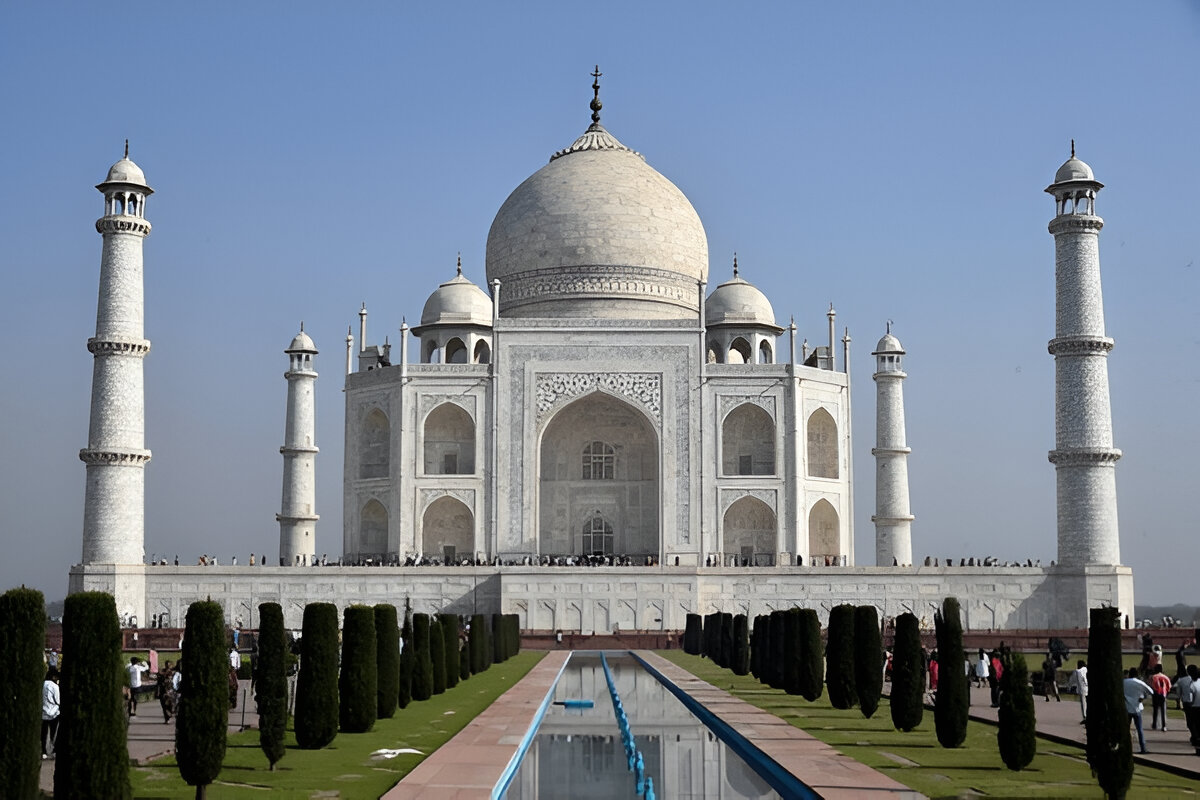
Agra, located in the northern state of Uttar Pradesh, is a city synonymous with the epitome of love and architectural brilliance – the Taj Mahal. However, this historic city offers much more than its world-famous monument. Agra’s rich history, which spans centuries, is evident in its magnificent forts, tombs, gardens, and vibrant bazaars. Once the capital of the Mughal Empire, Agra continues to charm visitors with its blend of history, culture, and artistry.
The Taj Mahal, a UNESCO World Heritage Site and one of the Seven Wonders of the World, is Agra’s crowning jewel. Commissioned by Emperor Shah Jahan in memory of his beloved wife Mumtaz Mahal, this white marble mausoleum took 22 years and over 20,000 artisans to complete.
Entry Fee: Indians- INR 40, Foreigners- INR 1000 Onwards, No entry below 15 yearsTimings: 30 Minutes before sunrise and closes 30 Minutes before sunset
Best Time To Visit: February-April
Nearest Airport: Agra Airport
Interesting Fact: A shopping complex and hotel inspired by the Taj Mahal is being constructed in Dubai and is estimated to be four times larger in size.
2. Hampi – A Lost Empire’s Treasure
Hampi, in Karnataka, is a UNESCO World Heritage Site known for the ruins of the Vijayanagara Empire. This historic town showcases remarkable architecture through monuments like the Virupaksha Temple, Vittala Temple, and the iconic Stone Chariot. The site’s intricate carvings and vast open spaces create an atmosphere where history comes alive. Walking through its ruins alongside the Tungabhadra River is like stepping back into the splendor of a once-thriving empire.
Moreover, Hampi’s UNESCO World Heritage status ensures that its legacy is preserved and appreciated worldwide. Walking through the remnants of Virupaksha Temple or Vitthala Temple feels like stepping into another era.
In short, Hampi isn’t just a destination; it’s a time machine.
Entry Fee: Indians- INR 10, Foreigners- INR 330 Onwards
Timings: 10 am to 5 pm (closed on Fridays)
Best Time To Visit: October to March
Nearest Airport: Hubli Airport (about 160 km from Hampi) or Bengaluru Airport (around 340 km away)
3. Hawa Mahal, Jaipur
The Hawa Mahal, or the “Palace of Winds,” is a stunning architectural masterpiece located in the heart of Jaipur, Rajasthan. Built in 1799 by Maharaja Sawai Pratap Singh, this iconic structure is a five-story palace made of red and pink sandstone, embodying the rich heritage of the Rajput er
The palace is famous for its 953 intricately carved jharokhas (windows), designed to allow the royal ladies to observe street festivities without being seen, adhering to the purdah system of the time. These windows also create a natural ventilation system, keeping the palace cool even during the hot summer months, thus earning its name.
In addition, landmarks like Jantar Mantar and Hawa Mahal reflect the architectural genius of past eras. The city’s vibrant bazaars and heritage hotels further deepen the royal experience.
Therefore, if you’re looking for the best destinations in India that take you back to history with royal grandeur, Jaipur is a must-visit.
Entry Fee: Indians- INR 10, Foreigners- INR 50 Onwards
Timings: 9.30 am to 4.30 pm
Best Time To Visit: November-February
Nearest Airport: Jaipur Airport
Related post; Jaipur travel tips
4. Khajuraho – Art, Spirituality, and Sensuality
Khajuraho, in Madhya Pradesh, is famed for its Hindu and Jain temples adorned with intricate carvings. These UNESCO-listed monuments celebrate life, spirituality, and human emotions, showcasing a blend of artistic and architectural ingenuity. Built between the 9th and 11th centuries, these temples are a testament to the Chandela dynasty’s artistic vision and India’s cultural depth.
The origins of Khajuraho’s temples are deeply rooted in the philosophy of Tantrism, which advocates the balance between the physical and the spiritual. The Chandela rulers envisioned these temples as a canvas to depict human experiences and divine connections. Once home to 85 temples, Khajuraho now boasts 25 well-preserved structures that captivate visitors from around the globe.
Interestingly, only 22 of the original 85 temples have survived, yet they remain a powerful testimony to medieval Indian society. The light and sound show at night brings the temples’ history to life in a captivating manner.
Thus, Khajuraho offers an unforgettable historical and cultural experience.
Entry Fee: Indians- INR 10, Foreigners- INR 250 Onwards
Timings: 8 am to 6 pm
Best Time To Visit: October-February
Nearest Airport: Khajuraho Airport
5. Varanasi – The Eternal City
Varanasi, one of the world’s oldest living cities, is an eternal symbol of Indian culture and spirituality. Situated on the banks of the Ganges, this city has been a hub for religion, learning, and tradition for over 2,000 years. From its ancient ghats to the narrow lanes leading to centuries-old temples, every part of Varanasi immerses you in a mystical atmosphere that feels timeless.
Additionally, ancient sites like Sarnath nearby add Buddhist heritage to the mix. Whether you’re witnessing the Ganga Aarti or exploring the narrow alleys, you feel the pulse of ancient India at every step.
Hence, Varanasi doesn’t just take you back to history—it takes you to the origin of Indian civilization.
The Kashi Vishwanath Temple, dedicated to Lord Shiva, is one of the most revered pilgrimage sites in India. Walking through the city’s labyrinthine lanes reveals ancient temples, vibrant bazaars, and the timeless art of silk weaving. Varanasi is also home to the Banaras Hindu University, a center of learning and culture, and Sarnath, where Lord Buddha delivered his first sermon.
Entry Fee: 20 for Indian nationals, ₹250 for foreign visitors.
Timings: 4:00 AM to 10:00 PM
Best Time To Visit: October to March
Nearest Airport: Lal Bahadur Shastri International Airport (Varanasi Airport),
6. Fatehpuri Sikri, Uttar Pradesh
Fatehpur Sikri, a UNESCO World Heritage Site, is a historical city near Agra in Uttar Pradesh. Built by Emperor Akbar in the late 16th century, this magnificent city served as the Mughal Empire’s capital for about 15 years before being abandoned due to water scarcity. Today, it stands as a testament to Akbar’s architectural brilliance and vision.
Entry Fee: Indians- INR 40, Foreigners- INR 510 Onwards
Timings: 6 am to 6 pm (Closed on Fridays)
Best Time To Visit: October to March
Nearest Airport: Agra Airport (Kheria Airport)
7. Sanchi Stupa, Madhya Pradesh
The Sanchi Stupa, located in the Raisen district of Madhya Pradesh, is one of the oldest and most well-preserved Buddhist monuments in India. Built by Emperor Ashoka in the 3rd century BCE, the stupa is a UNESCO World Heritage Site and a symbol of India’s rich Buddhist heritage.
The Sanchi Stupa was constructed to house the relics of Lord Buddha and serve as a center for meditation and learning. Its construction marked a significant milestone in the spread of Buddhism across the Indian subcontinent. Over time, additional stupas, temples, and monasteries were added, making Sanchi an important pilgrimage and cultural site.
Entry Fee: Indians- INR 10, Foreigners- INR 250 Onwards
Timings: 8.30 am to 5 pm
Best Time To Visit: October to March
Nearest Airport: Bhopal Airport (Raja Bhoj Airport)
8. Konark Temple
The Konark Sun Temple, located in Odisha, is an architectural marvel and a UNESCO World Heritage Site. Built in the 13th century by King Narasimhadeva I of the Eastern Ganga Dynasty, this temple is dedicated to Surya, the Sun God. Known as the “Black Pagoda” for its dark-colored stone and magnetic aura, the temple is a pinnacle of ancient Indian craftsmanship and devotion.
The Konark Sun Temple is not just a place of worship but a testament to India’s rich history, advanced engineering, and artistic brilliance. Whether you’re drawn by its historical significance, architectural grandeur, or spiritual aura, a visit to this iconic temple is a journey into the heart of India’s glorious past.
Entry Fee: Indians- INR 10, Foreigners- INR 250 Onwards
Timings: 10 am to 5 pm ( Closed on Fridays)
Best Time To Visit: October to March
Nearest Airport: Biju Patnaik International Airport (Bhubaneswar)
Related Blogs
Read All ›