Bhutan Tour Package from India — 5N/6D with Free Tiger’s Nest Hike


Duration
5 Nights 6 days
Max People
26
Min Age
3+
Pickup
Bagdogra Airport
Trip Highlights
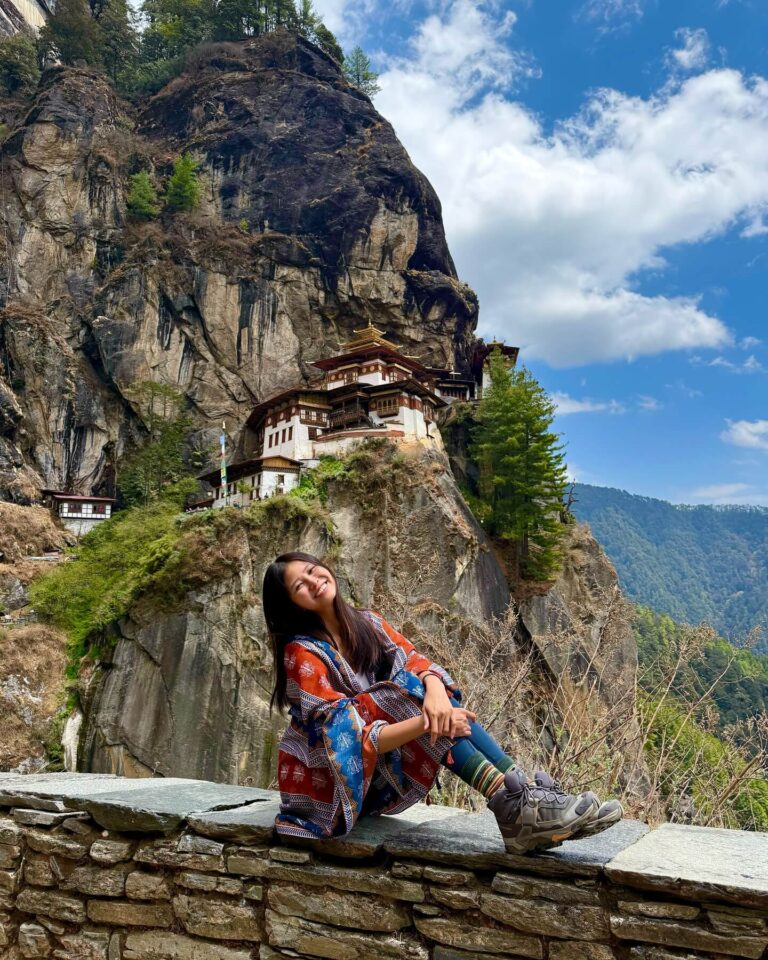
There is a moment on this trip that everyone remembers. You are standing on a ridge in Paro, slightly out of breath, and across the gorge — stuck to a cliff face nine hundred metres above the valley floor — is Taktsang, the Tiger’s Nest. White walls, gold roofs, prayer flags snapping in the wind. Photographs do not prepare you for how small it looks against that rock, or how quiet it is when you finally get inside.
This Bhutan tour package from India is built around getting you there properly rested and properly acclimatised. Five nights, six days, starting from ₹28,500 per person. You come in by road through Phuentsholing on the West Bengal border, spend two nights there while your permit is processed, climb to Thimphu for the capital’s temples and dzongs, then move to Paro for the hike itself.
We designed it this way for a reason. Most Bhutan itineraries fly you into Paro, which is expensive and rushes your body from sea level to 2,200 metres in a couple of hours. The road route from Bagdogra costs a fraction of that, gives your lungs two easy days to adjust, and honestly, the drive up through the pine forests is half the pleasure.
It suits couples, small families, first-time international travellers and anyone who wants a gentle introduction to the Himalayas without a serious trek. If you are wondering how many days are needed for a Bhutan trip from India, six is the honest minimum for a first visit — enough for Thimphu, Paro and Tiger’s Nest without spending every day in the car.
Come with an open mind and comfortable shoes. Bhutan tends to slow people down, and that is rather the point.
At a Glance
- Duration: 5 nights / 6 days
- Starting price: ₹28,500 per person
- Route: Bagdogra or Siliguri → Phuentsholing → Thimphu → Paro → back to Bagdogra
- Best season: March to May and September to November
- Best for: Couples, families, first-time flyers, small groups
- Difficulty: Easy, apart from the Tiger’s Nest hike on Day 4
- Highest point: Taktsang Monastery, 3,120 m
Travelling as a bigger group, or want to add Punakha and the Phobjikha valley? Pair this with our longer Bhutan itineraries and we will rebuild the route around your dates.
Included/Excluded
- Stay: 2 nights in Phuentsholing, deluxe hotel
- Stay: 1 night in Thimphu, deluxe hotel
- Stay: 2 nights in Paro, deluxe hotel
- Meals: Daily breakfast at all hotels
- Meals: One main meal each day — lunch or dinner, as per the hotel plan
- Transfers: Private vehicle throughout, Bagdogra/Siliguri in to Bagdogra/NJP out
- Sightseeing: Thimphu — Buddha Dordenma, National Memorial Chorten, Takin Preserve, Tashichho Dzong
- Sightseeing: Tiger's Nest hike day in Paro, with vehicle to and from the trailhead
- Permits: Assistance with Bhutan entry and exit permit formalities at Phuentsholing
- Guide: English and Hindi speaking guide in Bhutan
- 5% GST on the package value
- Bhutan Sustainable Development Fee (SDF) and permit charges, payable separately at actuals
- Trains or flights to and from Bagdogra / New Jalpaiguri
- Travel insurance
- A second main meal on any day, beyond the one included
- Entry and camera fees at monasteries, museums and viewpoints
- Personal expenses — laundry, tips, phone bills and shopping
- Anything not listed under Included above
Tour Plan
Your driver meets you at Bagdogra airport or Siliguri station and heads north through tea gardens — about four hours. The last stretch through Jaigaon is loud and dusty. Then you pass under a carved wooden gate and everything changes: swept streets, painted shopfronts, and the noise simply stops. Check in and take the evening slowly. Nothing is scheduled today on purpose, because tomorrow's permit queue goes better on a night's sleep.
Top Places to Cover
- Bhutan Gate — the ornate arch between Jaigaon and Phuentsholing
- Amo Chhu Crocodile Breeding Centre — a small riverside conservation centre, good with children
- Zangto Pelri Lhakhang — a town temple built as a model of Guru Rinpoche's heavenly abode
Why These Places Matter
Bhutan Gate — it marks the exact line where India ends and Bhutan begins. The carving follows the same rules used on temples across the country, so it previews everything you are about to see.
Zangto Pelri Lhakhang — a compact three-storey temple in a working town. It lets you see Bhutanese religious art up close before the bigger dzongs.
Day's Facts
- Bhutan measures Gross National Happiness alongside economic growth.
- The country is carbon negative — its forests absorb more than the nation emits.
- Phuentsholing sits at just 293 m, which makes tomorrow's climb dramatic.
Helpful Info
- Carry your original passport or voter ID and two passport photos. Aadhaar is not accepted.
- Indian rupees work here. Bring ₹100 and ₹500 notes; ₹2,000 notes are often refused.
- Lunch or dinner at your hotel is included.
After breakfast you collect your entry permit at the immigration office. Be patient — this is the one genuinely slow part of the trip. Then the road climbs for three hours, from 293 m to over 2,300, through cloud forest and past waterfalls that drop onto the road. Ears pop, the air turns cool and smells of pine smoke. Check in at Thimphu and explore at your own pace; the capital is small enough to walk.
Top Places to Cover
- Clock Tower Square — the social centre of the city, ringed with cafes
- Simply Bhutan — a living museum with national dress and butter tea to try
- Zilukha Nunnery — a working nunnery with a wide valley view
- Royal Botanical Garden — quiet paths, best in spring
Why These Places Matter
Thimphu itself — the only national capital on earth with no traffic lights. One was installed years ago and removed for being impersonal; policemen direct cars by hand instead.
Simply Bhutan — built to preserve crafts and rural traditions that were fading. The easiest place to understand daily Bhutanese life in under an hour.
Day's Facts
- Television and the internet were not permitted here until 1999.
- Thimphu only became the capital in 1955.
- By law new buildings must use traditional design — even the banks look like temples.
Helpful Info
- Carry a jacket. Thimphu drops sharply after sunset, even in summer.
- Drink water steadily — you gain over 2,000 m today and mild headaches are common.
- Shops shut early, so finish shopping before 8 pm.
- Breakfast, and lunch or dinner at your Thimphu hotel, are included.
Start early — this is the fullest morning of the trip. Begin at the National Memorial Chorten, where older Bhutanese walk clockwise with prayer wheels from dawn. Then uphill to the Buddha Dordenma above the valley, across to the Takin Preserve, and on to Tashichho Dzong. After lunch you drive to Paro, about ninety minutes, and check in. Rest properly tonight, because tomorrow is the hard day.
Top Places to Cover
- National Memorial Chorten — a working shrine, busiest and best at 8 am
- Buddha Dordenma — a 51.5 m gilded Buddha above Thimphu valley
- Motithang Takin Preserve — home of Bhutan's odd national animal
- Tashichho Dzong — fortress, monastery and government offices in one
- Changangkha Lhakhang — a 12th-century temple where newborns are blessed
Why These Places Matter
Tashichho Dzong — the most important dzong in the country. The current building was rebuilt in the 1960s in the traditional way, without nails and without architectural drawings.
National Memorial Chorten — built in 1974 for the third King. Unusually for a chorten it holds no remains, only his memory.
Buddha Dordenma — finished in 2015 for the fourth King's sixtieth birth anniversary, with 125,000 smaller Buddhas inside it.
Changangkha Lhakhang — Thimphu's oldest temple, where local parents still come to have children named and blessed.
Day's Facts
- The takin is said to have been made by the saint Drukpa Kunley from a goat's head and a cow's bones.
- Monks live in one half of Tashichho Dzong while ministers work in the other.
- Bhutan has never been colonised by any foreign power.
Helpful Info
- Dress modestly at dzongs — long trousers, covered shoulders, shoes off at shrine doors.
- Photography is fine in courtyards, not inside shrine rooms.
- Tashichho Dzong opens to visitors only after 5 pm on weekdays.
- Breakfast in Thimphu and lunch or dinner in Paro are included.
Eat a proper breakfast, because this is the day the trip is built around. Your vehicle drops you at the trailhead near Satsam Chorten and from there you walk, climbing through blue pine forest strung with prayer flags. A cafeteria at the halfway point is where most people decide whether to carry on. Beyond it lies a steep drop into the gorge and around 700 stone steps up the other side. Four to five hours up and back is realistic. Go slowly.
Top Places to Cover
- Taktsang Palphug Monastery — the Tiger's Nest, on a cliff 900 m above Paro valley
- Taktsang cafeteria viewpoint — the classic photo spot and a sensible turning point
- Prayer-flag ridge — the saddle where the whole valley opens up behind you
Why These Places Matter
Taktsang Monastery — Guru Padmasambhava is said to have flown here from Tibet on a tigress in the 8th century and meditated in the cliff cave. The monastery was built around that cave in 1692.
The 1998 restoration — a fire destroyed most of the complex that year. Everything used to rebuild it was carried up by mules and men, because there is still no road.
The cafeteria viewpoint — the photograph everyone recognises is taken from here, not from the top. Stopping here costs you nothing.
Day's Facts
- The monastery sits at about 3,120 m, roughly 900 m above the valley floor.
- For many Bhutanese this climb is a once-in-a-lifetime pilgrimage, like Kedarnath or Vaishno Devi.
- Phones and cameras are left in lockers at the entrance — no photography inside.
Helpful Info
- Start by 8 am. The path is shaded early and hot by eleven.
- Wear shoes with grip. The descent is harder on knees than the climb is on lungs.
- Ponies are available to the cafeteria only, and cannot bring you down.
- Carry two litres of water and something salty. There is one place to buy anything on the route.
- Breakfast and lunch or dinner at your Paro hotel are included.
A driving day, and after yesterday nobody minds. Five to six hours down through the same cloud forest you climbed on Day 2, except now you can enjoy it. You reach Phuentsholing in the late afternoon with time to walk up to Karbandi Monastery, where the view runs out over Jaigaon and the plains of Bengal. This is also your last chance to eat properly Bhutanese — order ema datshi, the chilli and cheese stew.
Top Places to Cover
- Karbandi Monastery — a hilltop gompa with gardens and a wide view over the plains
- Phuentsholing market — the last stop for souvenirs, cheaper than Thimphu
Why These Places Matter
Karbandi Monastery — built in 1967 by the Royal Grandmother, and known locally as the place women come to pray for children. Small offerings are still left at the shrine.
The view from Karbandi — it shows you the exact line where the Himalaya stops and the Indian plain begins, laid out below like a map.
Day's Facts
- Chillies are treated as a vegetable in Bhutan, not a spice.
- The sale of tobacco has been banned for years, and smoking in public carries a fine.
- You drop roughly 2,000 m today, which is why most people sleep well tonight.
Helpful Info
- Take motion-sickness medication before setting off if anyone is prone to it.
- Ask for ema datshi "less spicy" if unsure — kitchens are used to the request.
- Spend any remaining ngultrum today; it is not accepted across the border.
- Breakfast in Paro and lunch or dinner in Phuentsholing are included.
A relaxed final morning. After breakfast you check out and stop at the immigration office so your permit can be formally closed — ten minutes now saves real trouble on a future visit. Then it is about four hours back down to New Jalpaiguri station or Bagdogra airport, depending on Jaigaon traffic. Most people spend that drive quietly, scrolling back through photographs of a monastery they can hardly believe they climbed to.
Top Places to Cover
- Bhutan Immigration Office, Phuentsholing — permit closure and your official exit
- Jaigaon market — a quick last stop if your train time allows
Why This Matters
Closing your permit — Bhutan tracks who is inside its borders carefully, which is how a small country manages tourism without being overwhelmed. Travellers who skip this are often held up for hours on a future visit.
Day's Facts
- Bhutan opened to foreign tourists only in 1974, with fewer than 300 visitors that year.
- Archery is the national sport, played with singing, dancing and cheerful heckling.
Helpful Info
- Allow generous buffer time for a fixed flight — the Jaigaon stretch is unpredictable.
- Keep permit paperwork with you until you are across the border, not packed away.
- Breakfast at your Phuentsholing hotel is included.
Before You Go
Six days is enough to fall for Bhutan but not to finish it. Most travellers who do this route come back for Punakha and the black-necked cranes at Phobjikha. Tell us when you are ready and we will build it around your dates.
Download Above 5N/6D Full Itinerary in Detail PDF (Click Here)
Contact On WhatsApp: wp Link
Direct Call: +916200039989
You May Like

Dubai with Flights


Beautiful Vietnam Tour

Amazing Vietnam Tour

Frequently Asked Questions
How many days is the Bhutan Tour Package from India — 5N/6D with Free Tiger’s Nest Hike trip?
It is a 5N | 6D trip with a 7-day itinerary. The full day-by-day plan is in the Itinerary above, and we can shorten or extend it to fit your dates.
What is included in this package?
This package includes Stay: 2 nights in Phuentsholing, deluxe hotel, Stay: 1 night in Thimphu, deluxe hotel, Stay: 2 nights in Paro, deluxe hotel, Meals: Daily breakfast at all hotels, and more — see the full Inclusions list above. Flights and visas are quoted separately unless stated.
How much does the Bhutan Tour Package from India — 5N/6D with Free Tiger’s Nest Hike package cost?
Prices start from ₹28,500 per person on twin-sharing. Tap Get Quote for a customised price based on your travel dates, group size and hotel category.
Can I customise Bhutan Tour Package from India — 5N/6D with Free Tiger’s Nest Hike or travel on my own dates?
Yes — share your preferred dates, group size and hotel preference and our team will tailor this itinerary and send you a revised quote.
How do I book, and is it safe?
Send an enquiry or tap Get Quote and our specialist will call you back with availability, the detailed itinerary on WhatsApp and a secure payment link. A small booking amount confirms your seat.
Most Popular
 7N | 8D 25% Off
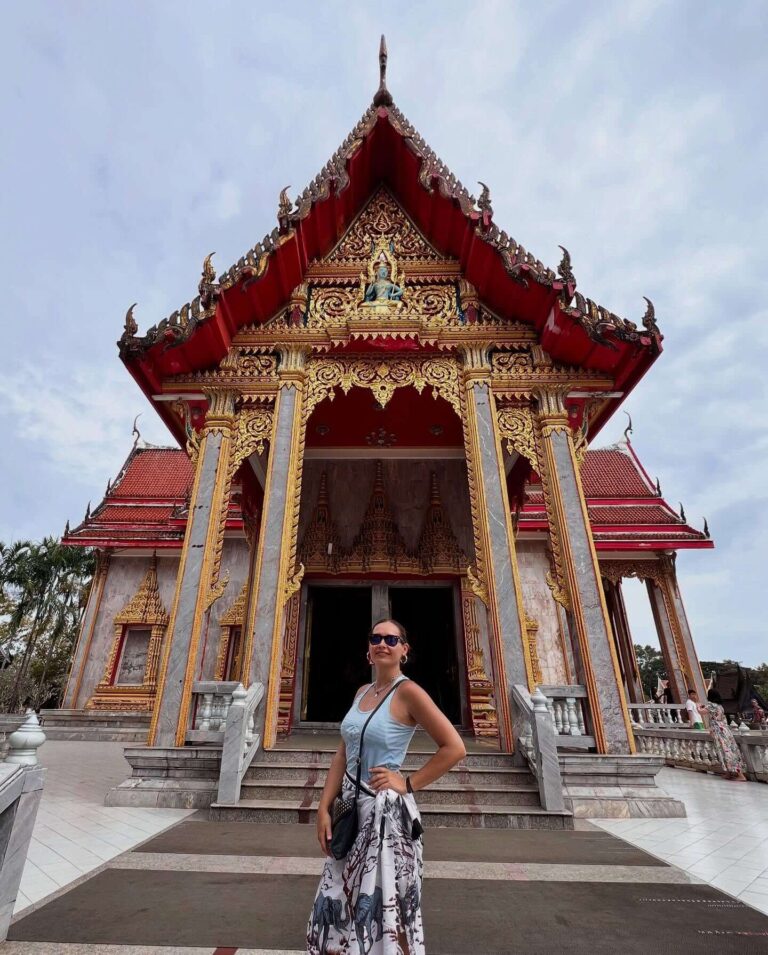
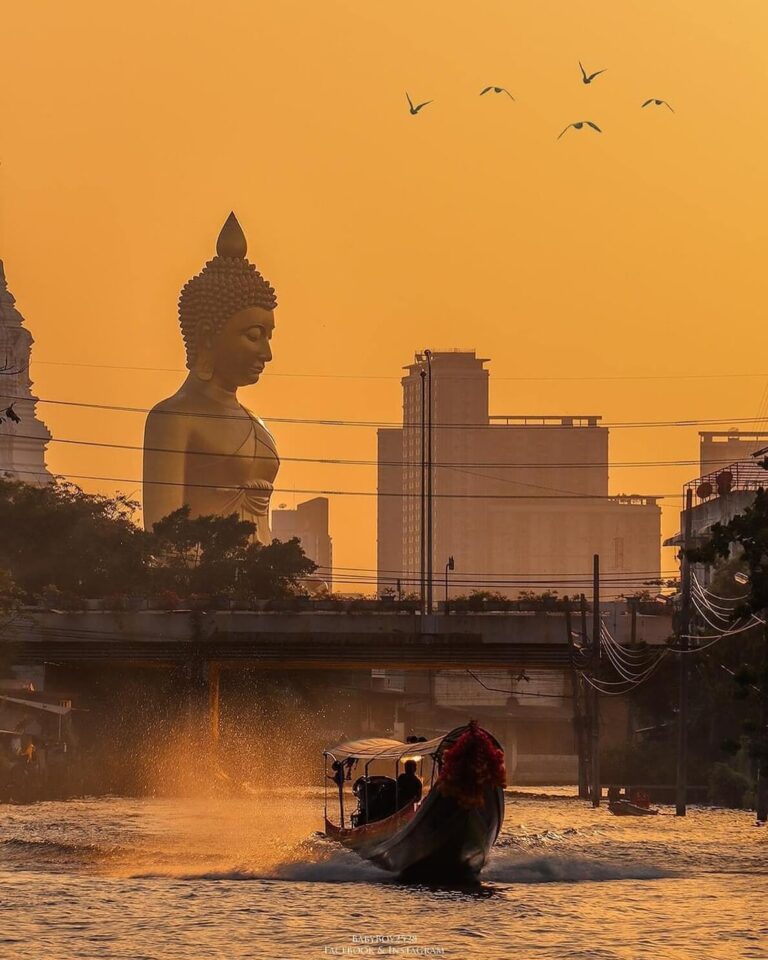
Best of Bangkok, Phuket & Krabi | Exploring the Jewels of Thailand
7N | 8D 25% Off
Best of Bangkok, Phuket & Krabi | Exploring the Jewels of Thailand
 5N | 6D 25% Off
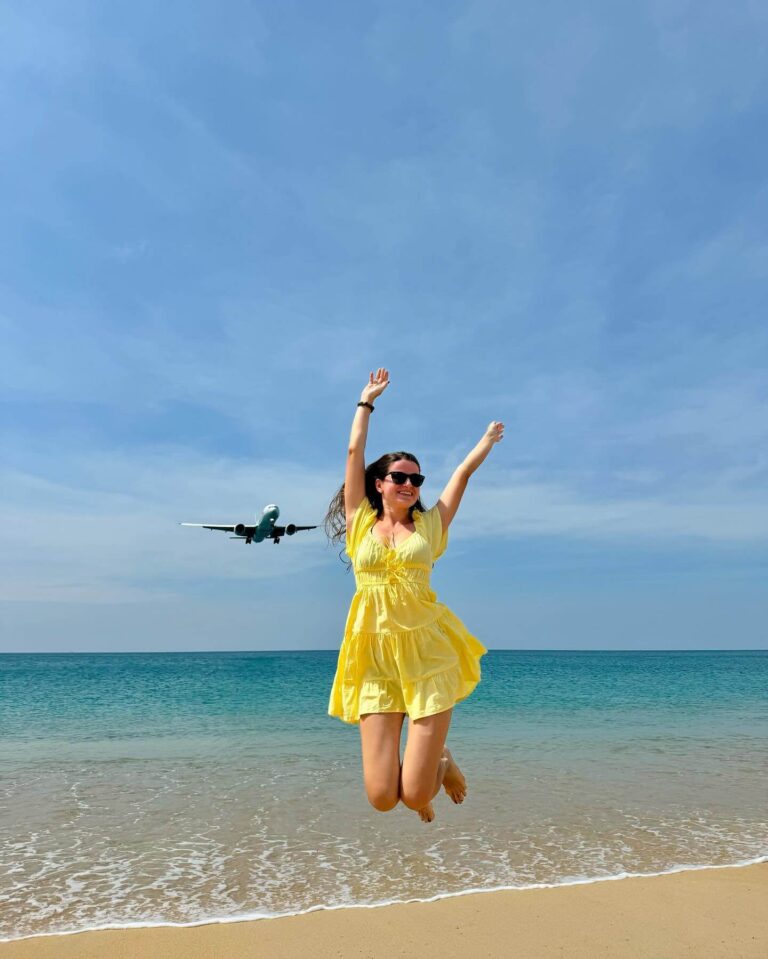
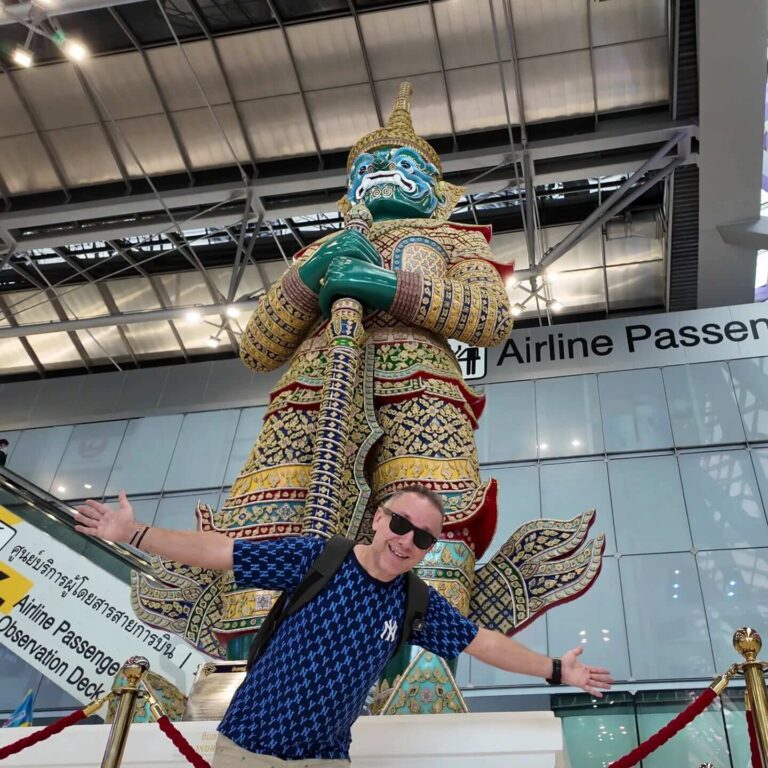
Bhutan Tour Package from India — 5N/6D with Free Tiger’s Nest Hike
5N | 6D 25% Off
Bhutan Tour Package from India — 5N/6D with Free Tiger’s Nest Hike
 6N | 7D 31% Off
INSTAGRAMMABLE Bhutan Group Tour | Excursion to Chele La Pass
7N | 8D 25% Off
Best of Bangkok, Phuket & Krabi | Exploring the Jewels of Thailand
5N | 6D 25% Off
Bhutan Tour Package from India — 5N/6D with Free Tiger’s Nest Hike
6N | 7D 31% Off
INSTAGRAMMABLE Bhutan Group Tour | Excursion to Chele La Pass
6N | 7D 31% Off
INSTAGRAMMABLE Bhutan Group Tour | Excursion to Chele La Pass
7N | 8D 25% Off
Best of Bangkok, Phuket & Krabi | Exploring the Jewels of Thailand
5N | 6D 25% Off
Bhutan Tour Package from India — 5N/6D with Free Tiger’s Nest Hike
6N | 7D 31% Off
INSTAGRAMMABLE Bhutan Group Tour | Excursion to Chele La Pass
Trending Packages
7N | 8D 25% Off
Best of Bangkok, Phuket & Krabi | Exploring the Jewels of Thailand
 7N | 8D 25% Off
Best of Bangkok, Phuket & Krabi | Exploring the Jewels of Thailand
7N | 8D 25% Off
Best of Bangkok, Phuket & Krabi | Exploring the Jewels of Thailand
Family Trip
Romantic Escape
7N | 8D 25% Off
Best of Bangkok, Phuket & Krabi | Exploring the Jewels of Thailand
5N | 6D 25% Off
Bhutan Tour Package from India — 5N/6D with Free Tiger’s Nest Hike
6N | 7D 31% Off
INSTAGRAMMABLE Bhutan Group Tour | Excursion to Chele La Pass
7N | 8D 25% Off
Best of Bangkok, Phuket & Krabi | Exploring the Jewels of Thailand
5N | 6D 25% Off
Bhutan Tour Package from India — 5N/6D with Free Tiger’s Nest Hike
6N | 7D 31% Off
INSTAGRAMMABLE Bhutan Group Tour | Excursion to Chele La Pass
Weekly Backpacking


Articles You May Like
Read All ›